


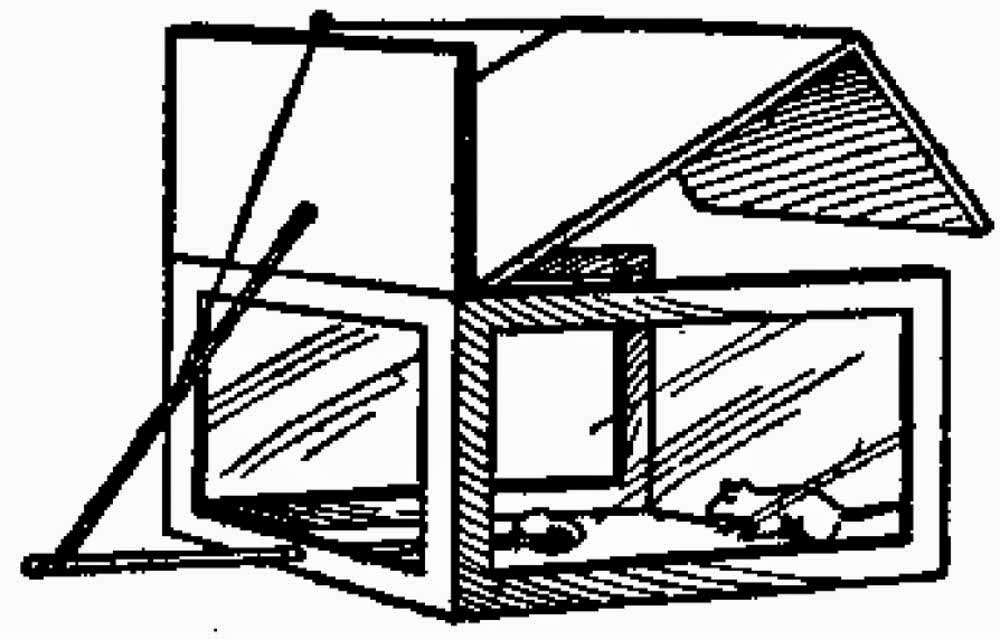
This is a box trap with glass sides and back, the panes of glass being held in place by brads placed on both sides.
The animal does not fear to enter the box, because he can see through it: when he enters, however, and touches the bait the lid is released and, dropping, shuts him in.
This is one of the easiest traps to build and is usually successful.
Excerpt from the book: THE BOY MECHANIC VOLUME I 700 THINGS FOR BOYS TO DO WITH 800 ILLUSTRATIONS 1913, BY H. H. WINDSOR CHICAGO POPULAR MECHANICS CO. PUBLISHERS

Humane Live-Capture and Release of Small Animals: Safety, Legal, and Animal Welfare Considerations
Before You Capture Any Wildlife
Check local laws and regulations before attempting to capture, relocate, or release wild animals. In many areas, wildlife relocation is restricted or requires permits because moving animals can spread disease, disrupt ecosystems, or reduce the animal’s chances of survival.
Determine Whether Capture Is Necessary
Live capture should generally be considered only when:
- A small animal is causing significant property damage.
- An animal is trapped in a hazardous location.
- The animal has entered a home, garage, shed, or other structure where it cannot safely exit on its own.
- A wildlife professional has recommended intervention.
For occasional visitors, non-capture methods such as exclusion, habitat modification, or deterrents are often more effective and less stressful for wildlife.
Choose a Humane Capture Method
A humane live-capture system should:
- Avoid causing injury, entanglement, or prolonged restraint.
- Protect the animal from extreme temperatures, rain, and direct sunlight.
- Provide adequate ventilation.
- Prevent escape without causing panic or self-injury.
Avoid devices that can injure feet, legs, tails, teeth, fur, feathers, or scales.
Minimize Stress During Capture
Wild animals are highly sensitive to stress.
To reduce stress:
- Check traps frequently.
- Avoid excessive handling.
- Keep noise and activity around the trap to a minimum.
- Cover the trap with a light cloth once an animal is captured to help calm it.
- Keep children and pets away.
Monitor Frequently
A trapped animal should never be left unattended for extended periods.
Frequent monitoring helps prevent:
- Heat stress
- Dehydration
- Exposure to severe weather
- Predation by domestic or wild animals
- Panic-related injuries
Safe Handling Practices
If handling becomes necessary:
- Wear gloves to protect both yourself and the animal.
- Lift carriers securely from the bottom.
- Keep fingers away from openings and wire mesh.
- Move slowly and calmly to avoid startling the animal.
- Avoid direct contact whenever possible.
Even small animals may bite, scratch, or injure themselves if frightened.
Release Considerations
When release is legally permitted:
- Release the animal as soon as practical.
- Choose a safe area with appropriate natural cover and habitat.
- Avoid releasing near roads, busy trails, or areas with heavy predator activity.
- Open the carrier and allow the animal to leave on its own rather than forcing it out.
Be aware that relocating wildlife far from its home territory may reduce survival rates and can be restricted in some jurisdictions.
When to Contact a Wildlife Professional
Seek assistance if:
- The animal appears injured or sick.
- The animal is unusually lethargic, weak, or disoriented.
- Young animals are present and may depend on a nearby parent.
- Local regulations prohibit relocation.
- You are unsure how to safely handle or release the animal.
Long-Term Prevention
After release, address the reason the animal was attracted to the area:
- Seal entry points into buildings and structures.
- Secure food sources, garbage, and pet food.
- Trim vegetation that provides access to roofs or structures.
- Remove nesting opportunities where appropriate.
- Use wildlife-friendly exclusion methods to discourage future visits.
Key Principle
The most humane wildlife management approach is prevention first, capture only when necessary, and minimizing stress, injury, and confinement time whenever an animal must be handled. Responsible wildlife management focuses on protecting both people and animals while encouraging long-term coexistence.


